Knee Replacement After 70: Is It Really Safe? Risks, Precautions and Recovery
If someone in your family is in their 70s and has been advised to get a knee replacement, the first question that comes to mind is almost always the same: is it safe to operate at this age, or does the risk simply become too high?
It's a fair question, and it doesn't have a simple yes-or-no answer. Over the last two decades, I've operated on hundreds of patients across Gurgaon and Delhi NCR who were in their 70s, 75s, and sometimes even past 80. In most cases, the surgery gave them back a quality of life they hadn't had in years. But age does bring a few extra considerations into the picture, and I'd rather walk you through them honestly than sugarcoat either side.
Does Age Alone Make the Surgery Risky?
Here's the truth: age by itself is not what determines whether a surgery is risky. Clinical research consistently shows that age alone is not a deciding factor in knee replacement outcomes — what matters far more is the patient's overall fitness, heart health, kidney function, diabetes control, and bone quality.
I've seen 68-year-old patients where surgery carried real risk because their diabetes was poorly controlled, and I've seen 78-year-old patients walking within two days of surgery because their overall fitness was excellent. That's why the first step is never about the number on the birth certificate — it's a full evaluation of the patient's health profile.
The Real Risks of Knee Replacement After 70 — No Sugarcoating
It would be misleading to say there's no added risk at this age. Realistically, a few risks are somewhat higher compared to a 45-year-old patient. But almost every one of them can be meaningfully reduced with the right preparation and modern surgical technique.
- Anesthesia-related risk — slightly more strain on the heart and lungs, which is why a pre-op cardiac evaluation is essential
- Blood clots (DVT) — prolonged bed rest can allow clots to form in the leg veins, which is why early mobilisation matters so much
- A slightly higher infection risk — especially if diabetes or immunity is not well controlled
- Slower healing — bone density and muscle strength naturally decline with age
- Existing conditions (heart disease, blood pressure, kidney issues) can raise surgical risk if they aren't well managed beforehand
None of these risks mean surgery is off the table. They simply mean that careful pre-op planning and an experienced surgical team make all the difference.
How Robotic and Computer-Navigated Surgery Lowers the Risk
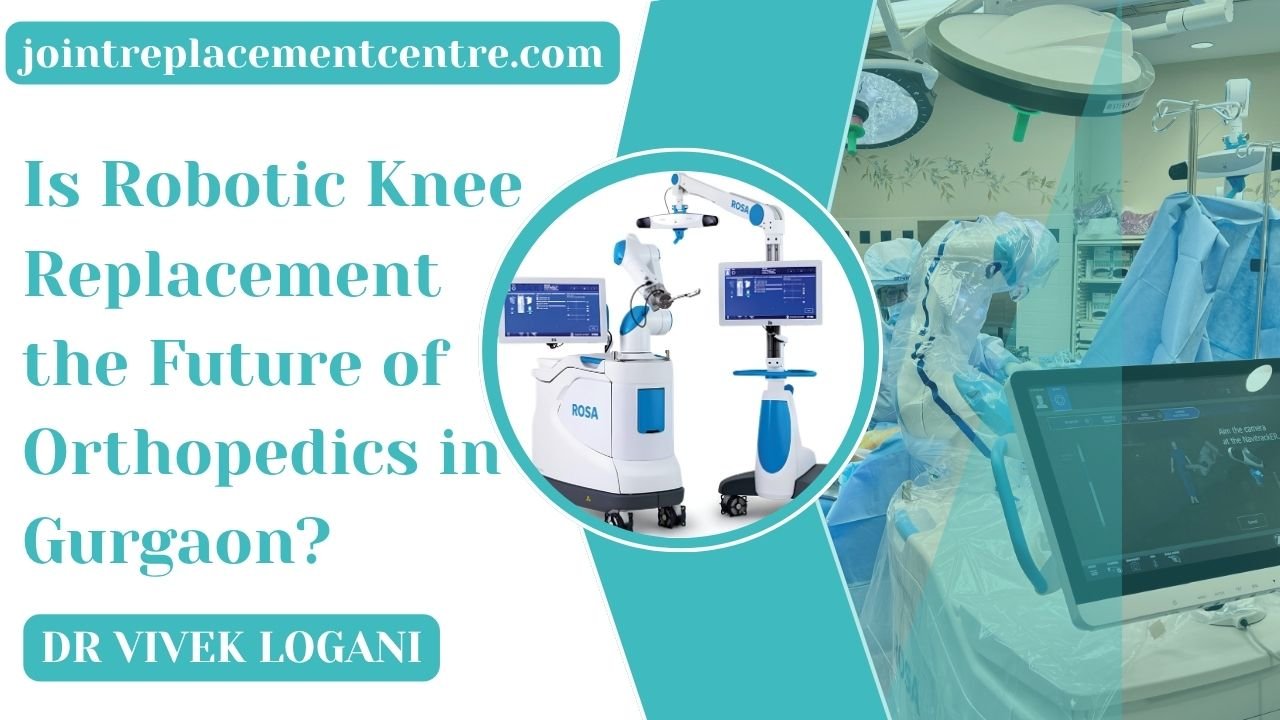
This is where technology genuinely changes the equation. In traditional surgery, the surgeon positions the implant based on experience and judgement. With computer navigation and robotic-assisted technique, every cut and every angle is planned with millimetre-level precision, which means:
- Shorter surgical time — which also reduces anesthesia exposure
- Less blood loss — particularly important for older patients
- More accurate implant positioning, which improves long-term outcomes
- Less soft tissue damage, which allows recovery to begin sooner
In my own practice, I perform 100% of knee replacements using computer navigation — which is a major reason this option is considerably safer for patients above 70.
Good to know: Computer-navigated and robotic-assisted techniques don't replace surgical judgement — they support it with millimetre-level planning, which matters even more once age adds extra variables to the equation.
Pre-Surgery Preparation Checklist for Patients Over 70
For patients over 70, a few additional checks are done before surgery so there are no surprises on the day of the procedure:
- Cardiac evaluation (ECG, 2D Echo) with cardiologist clearance
- Getting blood sugar and blood pressure under control before surgery
- A bone density (DEXA) scan if osteoporosis is suspected
- Adjusting or pausing blood-thinning medication on your doctor's advice, if applicable
- Checking for anemia and correcting it if needed
- Small but important home preparations — a western-style toilet seat, a walker, and non-slip flooring
Wondering if your parent or grandparent is a good candidate for surgery at their age? Get a personalised fitness evaluation from Dr. Vivek Logani.
Book a ConsultationRecovery Timeline After 70 — A Realistic Picture
It's important to set the right expectation here: recovery in a 70+ patient is often a little slower than in a 40-year-old, and that is completely normal. Here's a timeline I've seen consistently across my own patients:
Day 1–2 (In Hospital)
With modern navigation techniques, most patients start walking with a walker's support within 24–48 hours. The physiotherapist begins gentle bedside exercises almost immediately.
Week 1–2
Pain gradually reduces. Walking indoors with a walker or stick begins. Family support matters enormously at this stage.
Week 3–6
Knee bending and range of motion improve steadily. This is the stage where consistent physiotherapy makes the biggest difference. Most patients move from a walker to a stick, and many stop needing support altogether.
Month 2–3
Everyday activities — climbing stairs, short walks, visiting the local temple or park — start feeling normal again. Compared to younger patients, it can take an extra two to four weeks to reach this stage, but the end result is usually just as good.
Month 4–6
Most patients over 70 are walking without support by now, and have regained an independence that may not have been possible for months before surgery.
Why Physiotherapy Matters Even More at This Age
Surgery is only half the story. What actually determines the quality of your recovery is physiotherapy — and this is even truer for patients over 70. Muscle strength naturally declines with age, so a structured, supervised physiotherapy programme directly decides how fast and how well you recover.
Is Surgery Right for Everyone? When It's Better to Wait
Honestly, there are a few situations where we recommend postponing surgery a little:
- If a heart or kidney condition is not yet stable
- If there's an active infection anywhere in the body
- If the patient is too weak to realistically follow a physiotherapy programme
In these cases, we first work on stabilising the underlying condition, and manage pain in the meantime through non-surgical options — physiotherapy, injections, and weight management.
A Patient Story
A few months ago, a 74-year-old patient came to me from Sushant Lok. He had stopped visiting his neighbourhood temple for three years because of knee pain. He assumed surgery at his age would be too risky. After a cardiac fitness check and three weeks of getting his blood sugar under control, we went ahead with a navigation-guided knee replacement. Today, he walks in the park with his grandchildren — without any support. This isn't an isolated case; we've seen similar outcomes in many patients over 70 when the planning is right.
Frequently Asked Questions
Is there a maximum age limit for knee replacement?
There's no fixed "maximum age." The decision is based on overall fitness and heart-kidney health, not age alone. Surgery can be performed safely even in patients over 80 if they are otherwise fit.
How long does recovery take after 70?
Most patients start walking within 24–48 hours and return to normal daily activities within 3–4 months. Compared to younger patients, it can take a couple of extra weeks.
Can a diabetic or heart patient undergo knee replacement?
Yes, but their condition needs to be stabilised beforehand with a team of specialists (cardiologist, physician). Once stable, surgery can be performed safely.
Is robotic or navigation surgery better for elderly patients?
Yes — it reduces blood loss, surgical time, and soft tissue damage, all of which directly support a faster and safer recovery.
What precautions should be taken at home after surgery?
A western-style toilet seat, a walker or stick, non-slip flooring, and consistent physiotherapy are essential for a safe and speedy recovery.
Is partial (unicondylar) knee replacement possible for patients over 70?
Yes — if only one part of the knee is damaged, partial knee replacement can be a good option, and recovery is often quicker than with a total knee replacement.
Conclusion
Seventy, or even seventy-five, is just a number — it isn't the deciding factor for surgery. With the right pre-op planning, an experienced surgical team, and support from family, knee replacement can be just as safe and life-changing at this age as it is for a 50-year-old. The most important step is simply discussing your specific condition with a qualified joint replacement surgeon, without fear or unnecessary delay.
Disclaimer: This article is intended for general educational purposes and should not be considered medical advice. Every patient's health condition is different — the decision to undergo surgery should always be made in consultation with a qualified orthopedic surgeon after reviewing your medical reports.
Contact Us for Knee Replacement Treatment in Gurgaon
Dr. Vivek Logani — Joint Replacement Surgeon, Paras Hospital, Gurgaon (Sushant Lok Phase I). MBBS, MS (Orthopaedics), DNB (Orthopaedics) | 22+ years of arthroplasty experience | 5,500+ joint replacements and 300+ revision surgeries | A pioneer of computer-navigated knee replacement since 2009, performing 100% of primary knee replacements with navigation-guided precision.